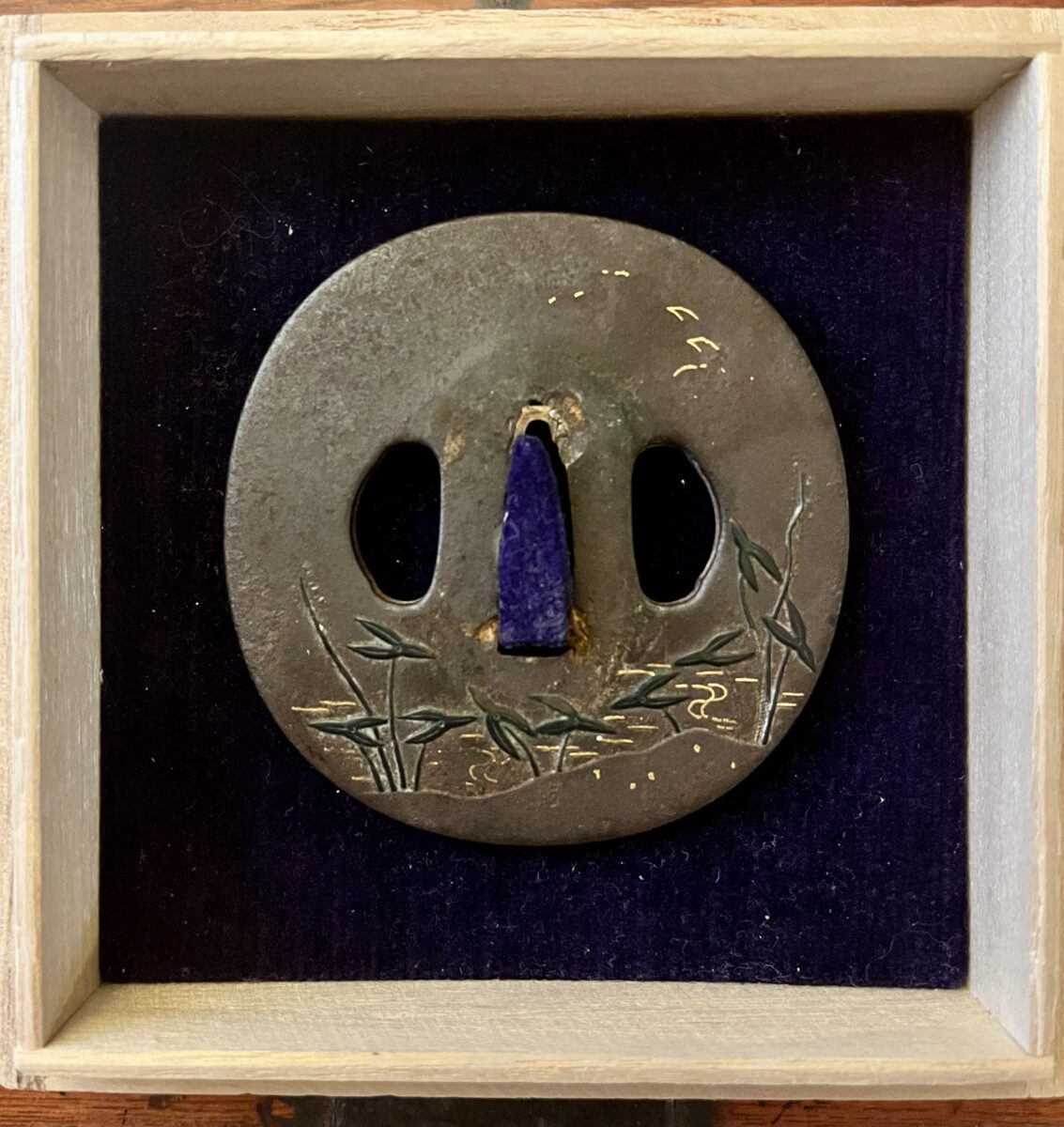
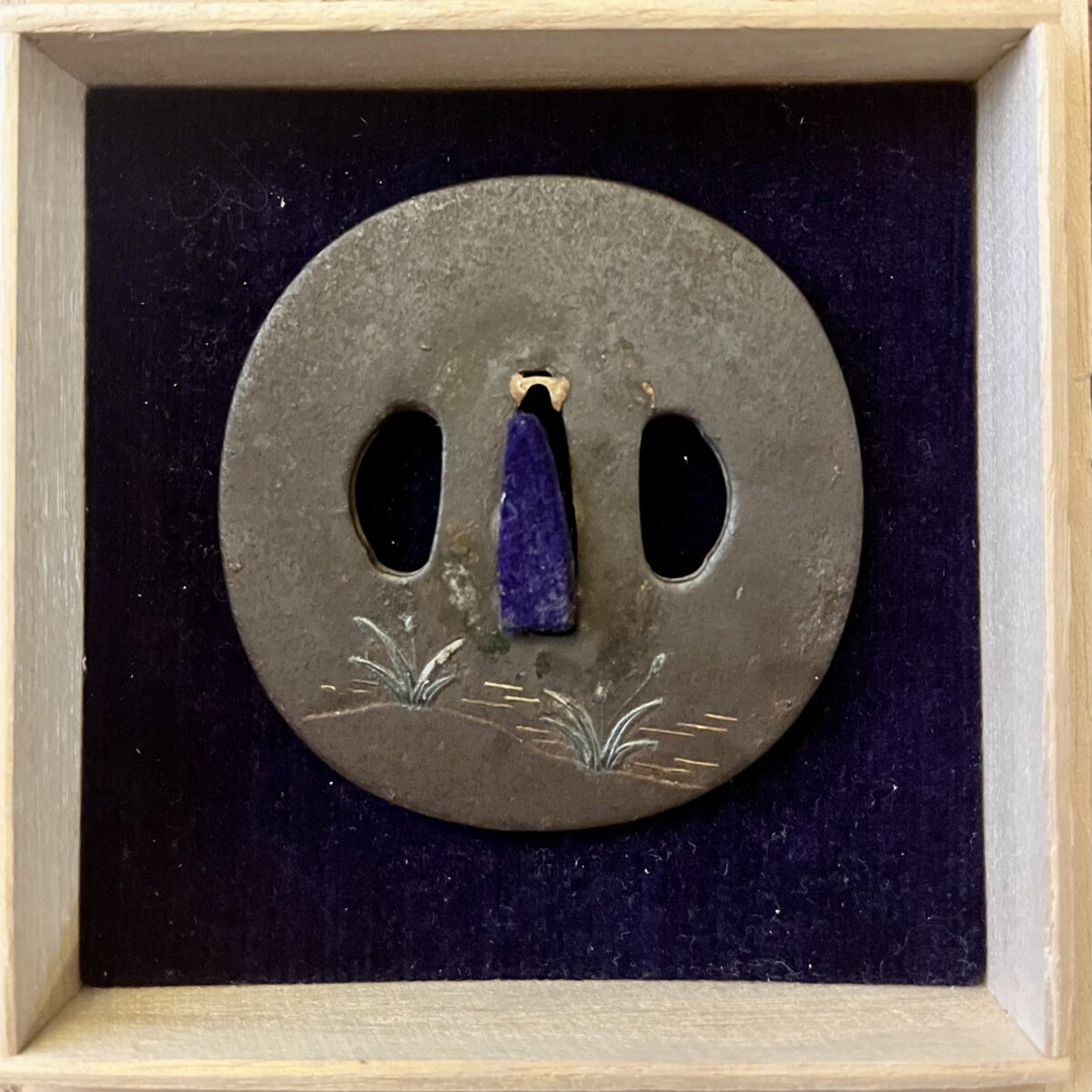
Aizu Shoami Tsuba
Aizu Shoami Tsuba
The Shoami (正阿弥) School was a highly influential and prolific school of Japanese tosogu craftsman, active from the late Muromachi (1336–1573) through the Edo (1603–1868) periods, known for diverse styles, innovative designs, and decorative inlays like gold, silver, and copper, with regional branches (e.g., Akita, Aizu, Kyo-shoami) developing distinct characteristics, making them significant to Japanese sword art history.
Key Characteristics:
- Innovation: Produced a vast range of designs, from bold openwork (sukashi) to intricate relief work.
- Materials: Frequently used iron as a base, enhanced with gold, silver, and copper inlay (zogan).
- Variety: Evolved into many regional styles (e.g., Akita Shoami, Aizu Shoami, Kyo-shoami) with unique characteristics.
- Craftsmanship: Known for technical skill, including engraving and ji-sukashi(openwork).
History:
- Origins: Believed to have started in Kyoto, with some theories linking them to silversmiths serving the Shogunate during the Muromachi period.
- Prolific Period: Continued to thrive through the Edo period, creating many decorative pieces for samurai and merchants.
Examples of Styles/Branches:
- Kyo-shoami: A Kyoto-based style.
- Akita Shoami: Known for sturdy iron tsuba with bold sukashi (openwork).
- Aizu Shoami: A prominent branch from the Aizu region.
- Awa Shoami: Another recognized provincial group.
In essence, the Shoami school represents a major chapter in Japanese sword fitting art, characterized by its widespread influence, artistic versatility, and enduring legacy.
Aizu Shoami会津正阿弥
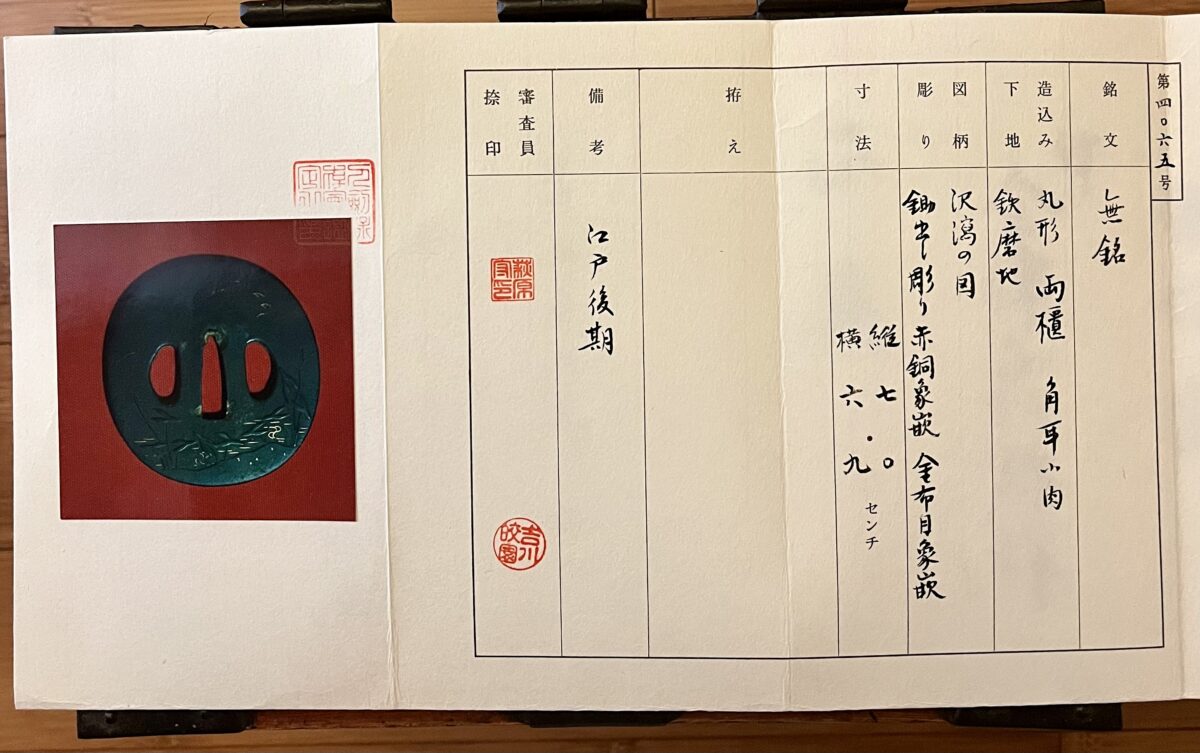
Late Edo Period
NTHK Kanteisho (1993)
Measurements: 7.0 cm x 6.8 cm, 2.5 cm ana.
Price: SOLD